
Changing Canadian Employment & Immigration
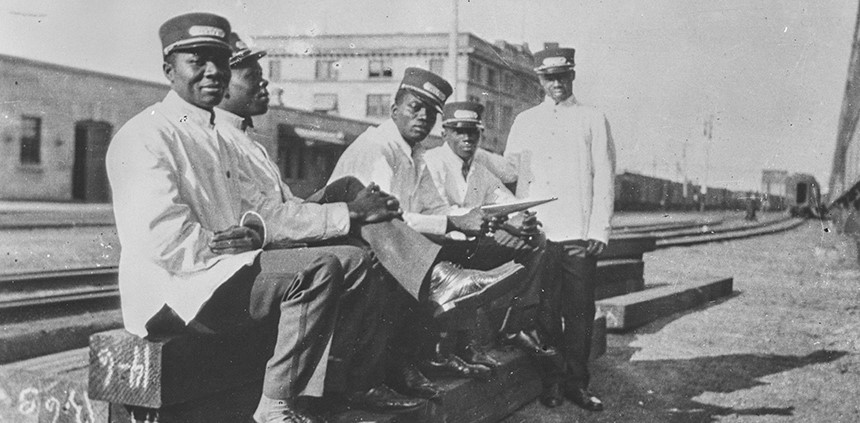
In the early 20th century, the train was the primary form of transportation across Canada. The porters on these trains were Black men, hired from Canada, the United States and the Caribbean. In fact, being a porter was one of the only jobs available to Black men at this time and employment patterns on the railroad influenced the locations of Black communities and culture.
Porters had to attend to all the needs of the passengers – set up berths, shine shoes, move luggage, care for children travelling alone and fix clothing. They worked up to 20 hour shifts, rarely saw their families, had no job security and faced continual racism. All of the porters were also called “George” as a way to erase their identities.
In the face of discrimination, the porters became activists. In 1917, a porter from Winnipeg named John Arthur Robinson started the first Black union in North America – the Order of Sleeping Car Porters (OSCP). The rail lines, especially Canadian Pacific, were very anti-union so the men organized in secret, sending secret messages* and conducting union business at Masonic meetings. Within two years, the Order had negotiated two contracts with the Canadian National Railway which improved wages, job protection and working conditions. They also gained the right to put up plaques on the cars they served, clearly stating their names.
Porters from the Caribbean were typically hired on short term contracts and were not allowed to stay when their contract ended. The government actually passed legislation prohibiting Black people from coming to Canada. One porter, Donald Moore a man from Barbados, saw the organizing of the OSCP and it led him to think he could change government policy on West Indian immigration. He later started the Negro Citizenship Association and in 1954 went to Ottawa with a delegation to present a brief. As a result, by 1955 domestic workers were able to gain permanent residency after a year of work – something they were never able to achieve before.
The door was beginning to open. And this opening was the result of the activism of the sleeping car porters – activism that changed Canadian labour standards and immigration laws.
*How did they send them? Find out next week!