
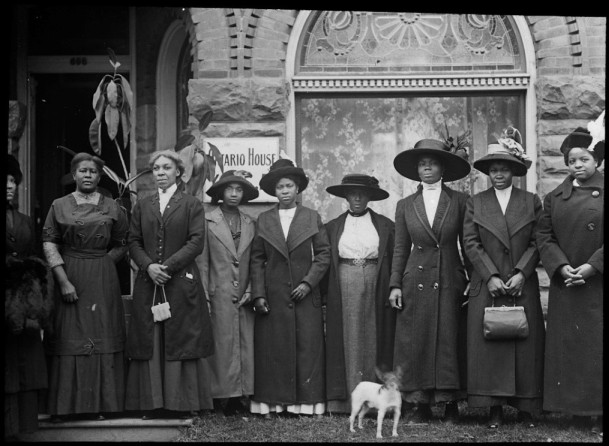
African-Canadian Women in the Early 20th Century
Last week, we learned that that when the Black sleeping car porters on the railways began unionizing, they sent secret messages to keep their activities from being detected by the anti-union corporations. But how did they send them? Through their wives, sisters and mothers. Black women in Canada were not allowed to work as porters themselves (which was actually a big disadvantage as this was one of the best-paying jobs a Black person could have at the time), but they played a key role in getting the union going. While they were doing the things women were expected to do, they were also passing messages through the Black community. “Tell your husband that the next meeting is at…” or “Let your brother know that the Order of Sleeping Car Porters is going to…” In this way, the sleeping car porters were able to organize effectively without their bosses realizing it.
The women of the Black community did so many other incredible things as well. At a time when Black people were excluded from health care, they provided nursing and medical care; standing against the discrimination of Canadian society, they organized Black associations such as the Coloured Women’s Club of Montreal and fought for human rights; through these associations and the Black church which was a backbone of the community, they ran tuition drives to help young people get to college, counselled new mothers, clothed West Indian and American newcomers, organized food drives and ran a Black history library. In Winnipeg, Lena Robinson, the wife of John A. Robinson (founder of the porters’ union) was a huge community leader and a pastor in the Bethel A.M.E church. These activities – perhaps even more than the economic gains made by the unions – served to uplift their communities’ spirits and sense of pride.
And through all this, the women were chroniclers. They recorded and published stories about Black life in Canada, sending articles to major Black newspapers all across the continent, preserving this important piece of Canadian history.
To learn more about the porters and their families, see North of the Color Line by Sarah-Jane Mathieu.